Katara Cultural Village: What's Free, and the Two Mosques People Mix Up
Katara is a public cultural district, not a ticketed attraction: walking in costs nothing, and so does its planetarium. It holds two separate mosques, the turquoise Katara Mosque and the gold-tiled Golden Mosque, regularly confused for one another online, plus traditional pigeon towers and an amphitheatre completed in 2008, before Katara itself existed.
Katara Cultural Village has no entry gate and no admission fee, which is the first thing worth knowing before anything about what is actually inside. The second is that it holds two visually similar but entirely separate mosques, photographed and mislabelled as each other often enough that it is worth sorting out early.
What's actually free, and what isn't
Katara is a public district, not a ticketed venue: there is nothing to pay to walk through it. What costs money is specific, bookable content inside it, not the place itself.
| Cost | |
|---|---|
| Walking through the district | Free, no gate or ticket |
| Al Thuraya Planetarium | Free, first-come first-served; some special screenings need a reserved e-ticket |
| Amphitheatre and Opera House shows | Priced per event, not a standing admission fee |
| Katara Beach | Free to access; paid activities (pedal boating, kayaking) available on site |
Source: Al Thuraya Planetarium's own listing on visitqatar.com and Expedia, and general visitor reporting, checked 29 October 2026.
Seeing it as part of a Doha city tour
Worth it if Katara is one stop among several rather than the main reason for the day: a half-day tour that also covers Souq Waqif, the Corniche and The Pearl packs four districts into one booking instead of arranging transport between each.

Doha City Tour: Souq Waqif, Corniche, The Pearl, Katara
A half-day orientation tour of Doha covering Souq Waqif, the Corniche, The Pearl and Katara Cultural Village, run by Doha Tourism. Private and small-group options available; museum entrance fees are not included.
Two mosques, not one: blue and gold
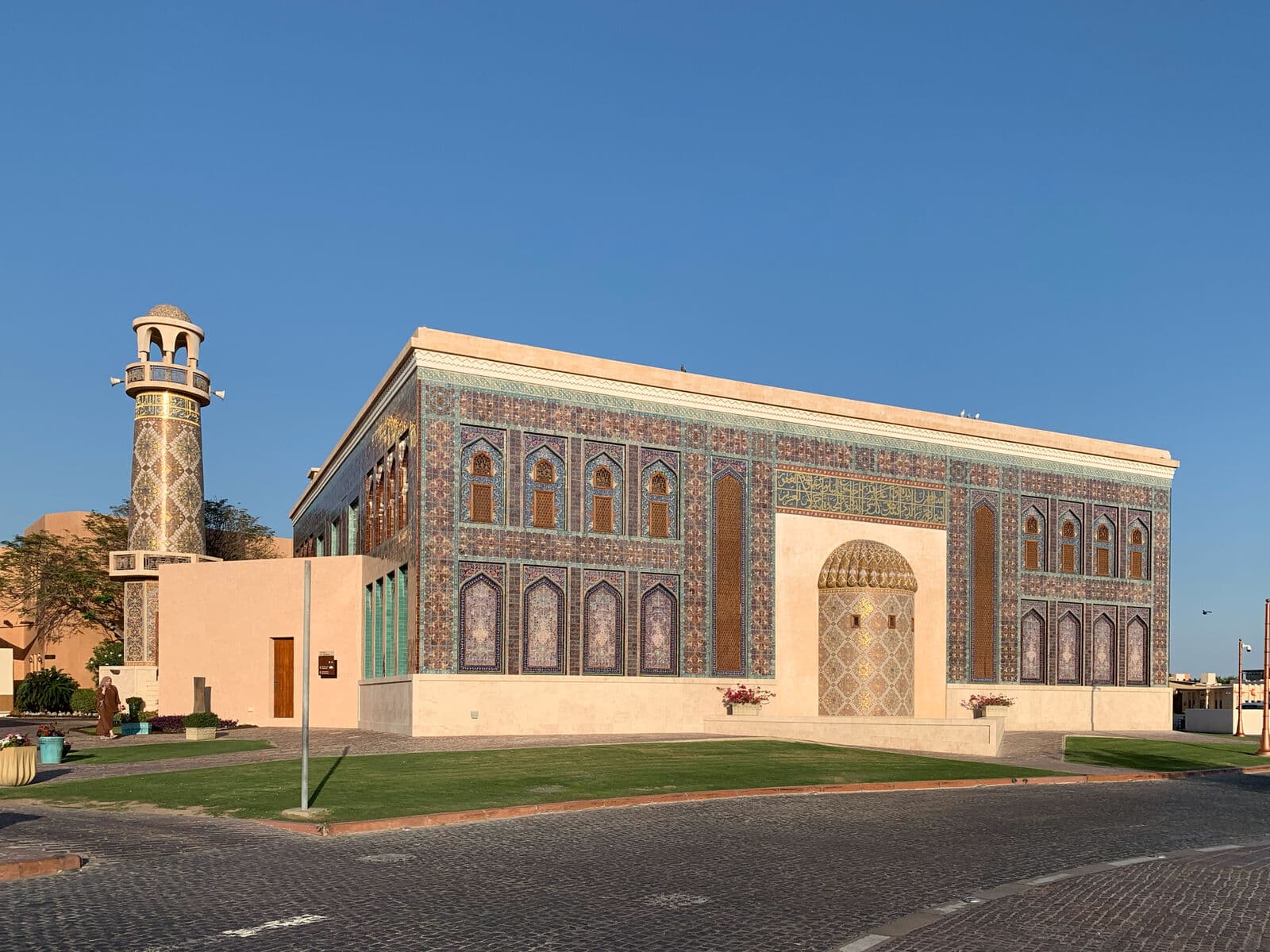
Katara holds two separate mosques, both striking, both frequently photographed, and regularly mixed up online because neither has an obvious name attached to the image.
| Katara Mosque (Blue Mosque) | Golden Mosque | |
|---|---|---|
| Style | Turquoise and purple mosaic tiles | Ottoman-style, gold mosaic tiles |
| Designer | Turkish architect Zainab Fadil Oglu | Not consistently credited across sources |
Source: Cross-checked across independent architecture and visitor sources, checked 29 October 2026.
The amphitheatre is older than Katara itself
Katara’s amphitheatre, blending classical Greek theatre design with Arabic architectural elements, was completed in 2008 and seats up to 5,000 across 3,275 square metres, confirmed directly by Katara’s own account and corroborated independently. The cultural village built up around it did not soft-open until October 2010, during the Doha Tribeca Film Festival, two years later. The Opera House, a separate 550-seat venue, is the only one of its kind in Qatar.
The pigeon towers, Katara's least-photographed landmark
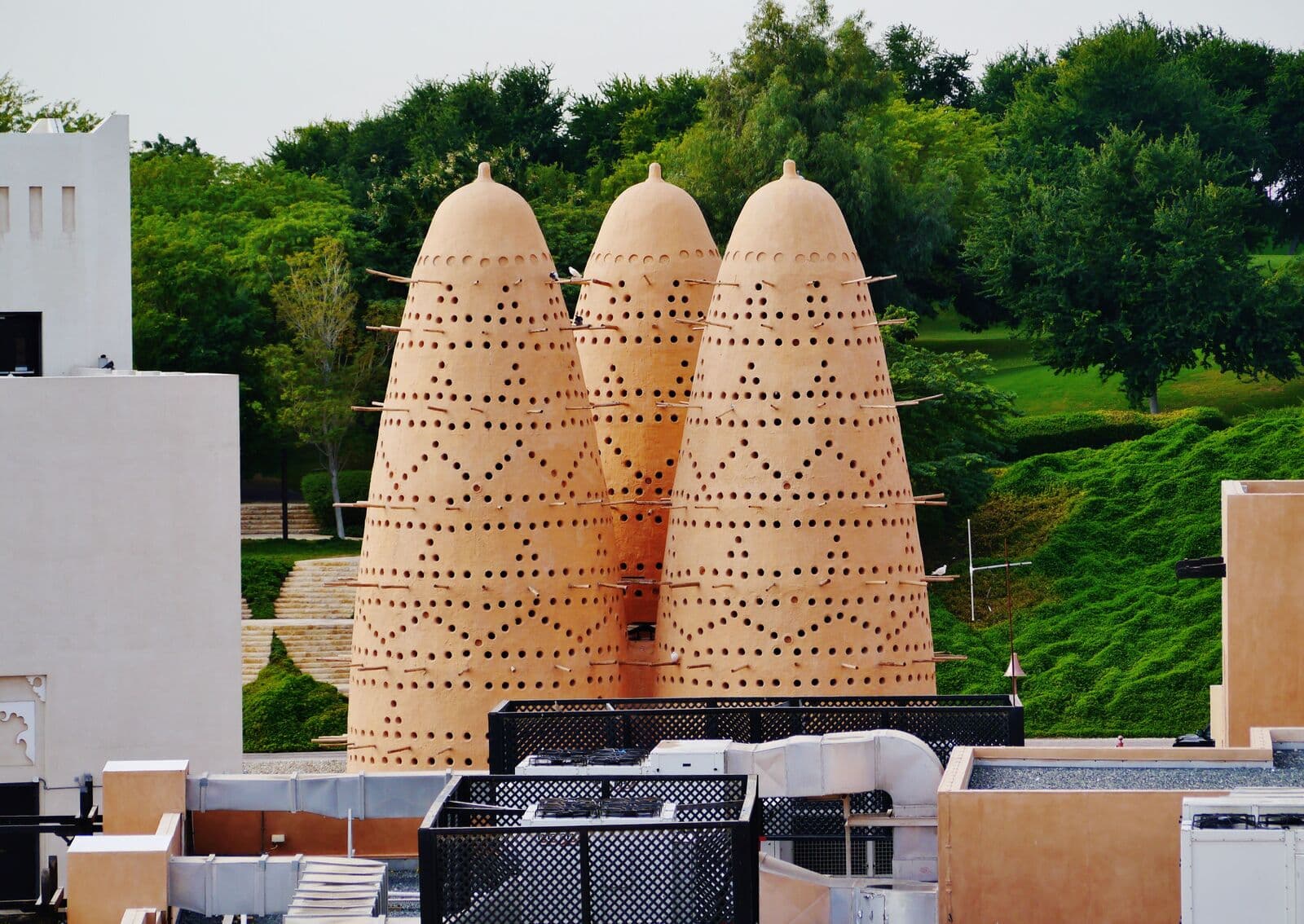
Traditional brick-and-clay towers, built to house pigeons in a style found historically across the Gulf, stand near the amphitheatre as a reconstructed heritage feature rather than a working dovecote. They draw far less attention than the mosques or the beach, despite being one of the more distinctive things on site to photograph.
How visitors rate it
The review count is large enough to read as a genuine pattern rather than an early, easily skewed sample.
| Source | Rating | Review count | Rank |
|---|---|---|---|
| Tripadvisor | 4.3 / 5 | 2,775 | #12 of 188 things to do in Doha, 2026 Travelers' Choice |
Source: Tripadvisor's own listing, checked 29 October 2026.
Is Katara Cultural Village free to visit?
Yes, there is no entry gate or admission fee to walk through Katara itself. Individual venues inside vary: the Al Thuraya Planetarium is separately free, first-come first-served, while ticketed events, exhibitions and shows at the amphitheatre or Opera House are priced per event.
Are the Blue Mosque and the Golden Mosque at Katara the same building?
No, two separate mosques. The Katara Mosque, often called the Blue Mosque, is decorated in turquoise and purple mosaics and was designed by Turkish architect Zainab Fadil Oglu. The Golden Mosque sits nearby, built in Ottoman style and covered in gold mosaic tiles. Photos of either one get captioned as "the Katara mosque" online often enough that the distinction is worth making explicit.
What is the Katara amphitheatre, and how big is it?
A 3,275 square metre open-air venue seating up to 5,000 people, blending Greek and Arabic architectural elements. It was completed in 2008, two years before Katara itself soft-opened, making it older than the cultural village built up around it.
Is the Katara planetarium free?
Yes. Entry is free and shows do not require advance booking, though seating is first-come first-served and some special screenings ask for an e-ticket reserved a day ahead. It now operates under the name Al Thuraya Planetarium rather than the older "Katara Planetarium" label some pages still use.
What are the pigeon towers at Katara?
Traditional brick-and-clay towers built to house pigeons, a design found historically across the Gulf and reconstructed at Katara as a heritage feature rather than a functioning dovecote. They sit near the amphitheatre and are one of the village's more distinctive photo stops precisely because they are not a mosque, a gallery or a beach, the three things most write-ups focus on.
Is Katara Cultural Village worth visiting?
Tripadvisor rates it 4.3 out of 5 from 2,775 reviews, ranked 12th of 188 things to do in Doha and a 2026 Travelers' Choice winner, a strong, well-sampled result rather than a handful of enthusiastic reviews.
Diego Fresno
Spent a trip through the Gulf from 7 to 17 December 2023: Bahrain on the 11th, Dubai and Abu Dhabi over the 13th, 15th and 16th, Doha on the 17th. One trip through the Gulf, not four separate ones, which is the whole reason this site exists instead of a single-city blog. One trip three years ago does not make anyone an expert on a region, which is why every price, floor number and opening time here is checked against the operator's own site before it goes on a page, not remembered from the trip.
Read next: Souq Waqif, Doha Corniche, or back to the Doha guide.